
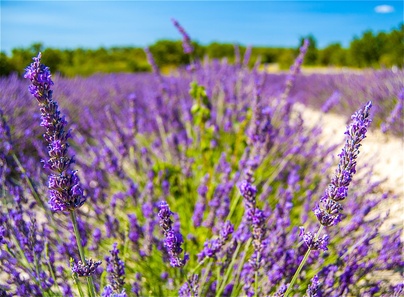
The view across a flowering lavender field is certainly one of the most beautiful holiday memories you can take home from the south of France. The strong purple of the blossoms is a blessing for the eyes, and the beguiling scent of this plant, so typical of the region, refreshes mind and soul. But the lavender plant promises more than just a sensual experience.
Lavender in history
Lavender has served people for thousands of years as a means of beauty and health. It is said to have been the ancient Romans who gave the plant its name. They used lavender as an additive in their Roman baths and washed with its essences. “Lavare” is the Latin word for washing. But not only that: French perfumers have valued it as a perfume plant since the 13th century and were already amazed then at the further effects it had. All those who were busy processing lavender plants were less often carried off by plague or cholera. This was evidently due to the antiseptic, antiviral and antibacterial properties of this labiate. Hildegard of Bingen even called it “Mother of God herb”, since it was said to banish unchaste desires.
Effects and uses of lavender
Be that as it may, lavender is an extremely versatile plant. Its oil cares for the skin, and its essential components have a calming effect on the psyche. Lavender oil is also indispensable as an ingredient in a wide variety of cosmetics. Lavender tea helps with states of restlessness, sleep disorders and nervousness. Even headaches and heart complaints can be eased by it. Skin impurities disappear after compresses of lavender tea, and irritated skin is soothed. Lavender as a medicinal plant always has a balancing and harmonising effect, which is especially noticeable in a lavender bath after a strenuous day. Such a bath relaxes skin and muscles and drives away unpleasant thoughts.
But lavender can do even more. It is a well-known helper in the household. Its pleasant scent makes it an ideal additive to laundry care products, and on top of that it drives away moths and other insects. Lavender has even made a name for itself as an ingredient in the delicious cuisine of southern France.
The Lavender Museum
Anyone who wants to look more closely at this beautiful and healing plant during a stay in the Ardèche is recommended to visit the Lavender Museum in Saint-Remèze. The small but extremely interesting museum is open from April to September and conveys worthwhile knowledge about lavender, its history, use and processing. Historical photographs and scientifically sound explanations tell the story of this plant, from ancient Egypt to modern times. Visitors to the Lavender Museum can find out in detail about the distillation and further processing of the essences in the distillery attached to the museum. Even explanations of the botanical classification of lavender are not neglected. A small garden contains the various species of the plant that are grown and cultivated today. The museum’s own boutique of course has a wide-ranging assortment of lavender products, from scented sachets to precious French perfume. Who could resist this temptation?
Saint-Remèze lies halfway along the route from Vallon-Pont-d’Arc to Bourg-Saint-Andéol, about 15 km from each of the two places. Larger groups should if possible register before visiting the Lavender Museum. Further information on the Lavender Museum is available at www.ardechelavandes.com.