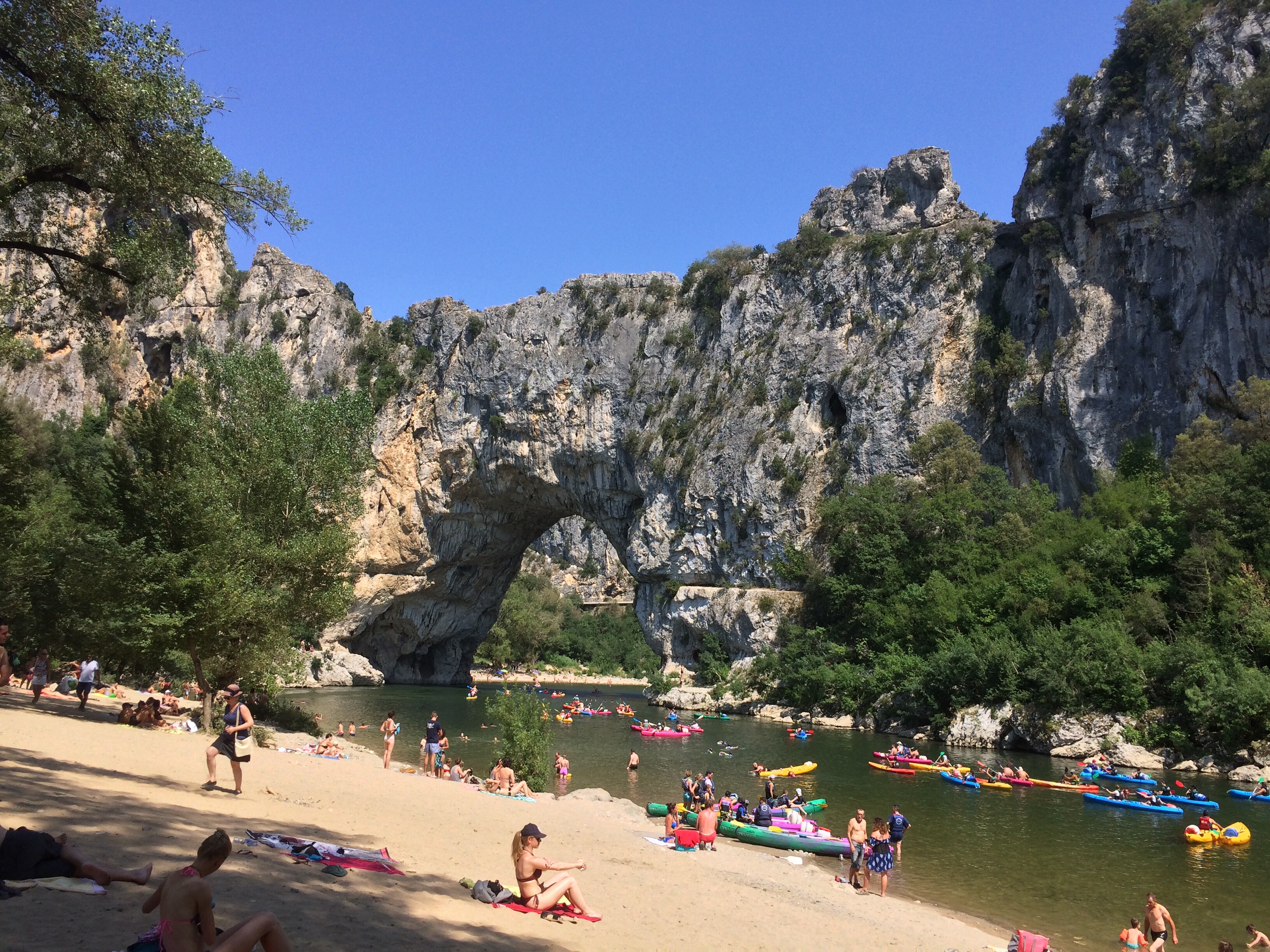
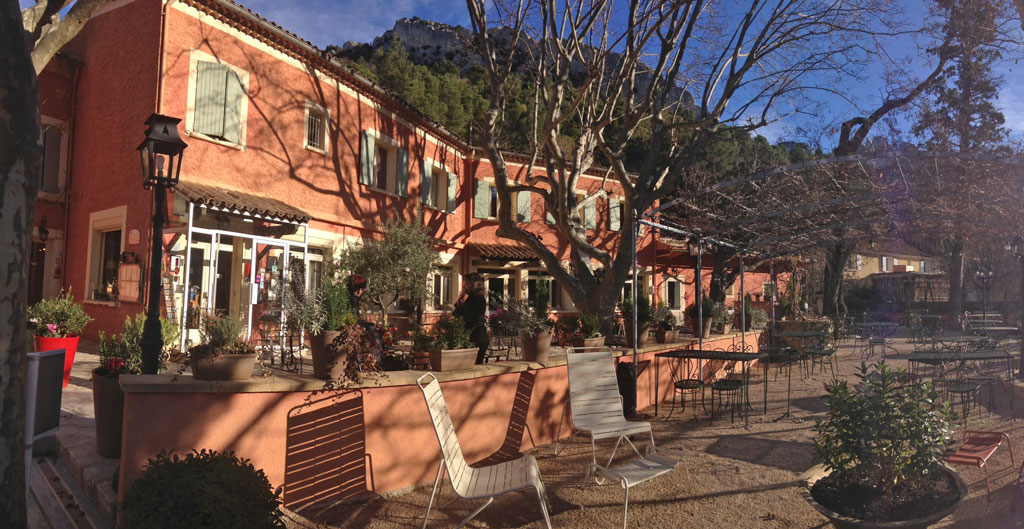
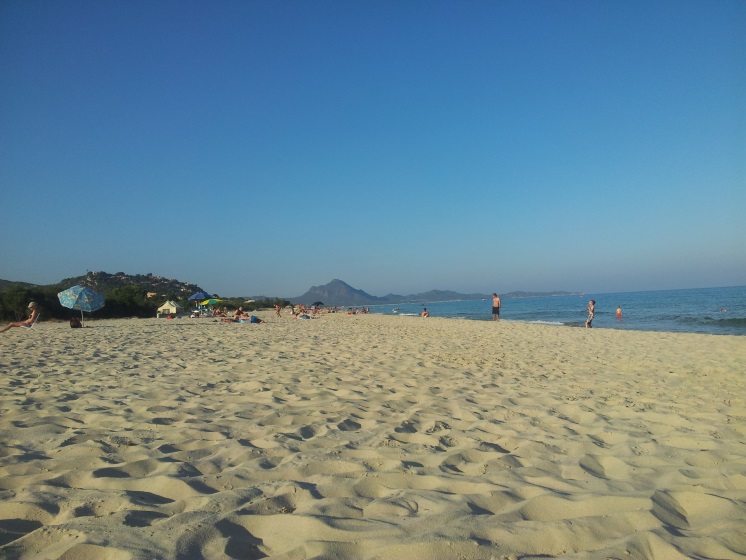
There is sand, shallow water and deep water, and a magnificent view of the Pont d’Arc. Trees provide pleasant shade everywhere, but you can also enjoy the sun. There is a nice restaurant at the car park. Just before the beach, a small kiosk sells ice cream.
Like a long, humpbacked tomcat, the Lubéron stretches out amid green vineyards, light olive groves and fragrant lavender fields, and seems to reach its paws into the cool waters of the Durance. Located in the Provençal département of Vaucluse, the green-clad range forms a natural barrier against the cold winds from the north. Spoilt by the sun in this way, some of the best grapes in the world thrive on its south slopes. But deep inside it, too, one of the noblest fruits of the earth in the world ripens every year: the “rabasse”. A fine Périgord truffle veined with white, the rabasse is regarded not only as a top variety but also, after the white Alba truffle from Piedmont, as the second most expensive truffle in the world. Who would not feel like a delicious journey through the Lubéron? The “Tour de Lubéron” turns out to be an extraordinary cycling tour.
By bike to culinary bliss
A newly established cycle route, the Tour de Lubéron leads once around the mountain range, which rises to 1,124 metres, and offers on a length of 235 kilometres varied insights into the culture and history of the region. That wine and truffles need not necessarily be on the menu is proved by the picturesque market town of Cavaillon. In big letters, signs at the station tell the cyclist that he is in the “capital of the melon”. And indeed: anyone who visits the Monday market around Cavaillon cathedral in autumn sees, between cherries, strawberries, apricots and grapes, veritable mountains of big, juicy melons. Quickly reached on two wheels, it is only a stone’s throw from Cavaillon to the sleepy village of Robion.
Behind grey rubble-stone walls, the “Café de la Poste” gladly serves a freshly squeezed orange juice. Well fortified, the next stage leads to Ménerbes. On several terraces the medieval fortified town nestles close to the mountain and seems somehow out of time. But the first impression deceives, for at the Domaine de la Citadelle at the foot of the hill village it is as busy as a beehive: “Dégustation? Bien sûr!” echoes through the halls and tasting glasses and bottles are handed out without pause. Next door in the Corkscrew Museum, it seems as if the “créateurs de tire-bouchon” took their cue from the winding serpentines of the Lubéron. For on arm-thick wooden levers, filigree iron handles and tiny rings, visitors discover boldly twisted corkscrews for every occasion.
Equipped with a handy corkscrew for spontaneous tastings on the way, the next stage leads to Apt. A little hungry, the “omelette aux truffes” in the airy restaurant Au Platane works real wonders. Add a glass of red cuvée from the local Sylla winery and the appetite for adventure returns at once. With the taste of the rabasse still in the mouth, the bike seems to glide effortlessly through the shady cedar and oak forests near Pertuis.
Between September and October in particular, many “rabassiers”, truffle hunters, are out here with their truffle dogs. The “fragrant nuggets of gold” are sold from November at the “Marché aux Truffes” in Richerenches. Every Saturday until the end of March, gourmets, truffle hunters and dealers meet here and set the current price of the noble tuber. With further delicious stops at the market of Lourmarin, where richly filled fougasse breads are waiting to be discovered, and at the restaurant “La Petite Maison de Cucuron”, whose chef Eric Sapet has been awarded 3 Michelin stars and kindles real palate dreams with imaginative menu creations, the epicurean cyclist reaches his starting point again after about a week: the fragrant market of Cavaillon.
Tip for owners and landlords of a holiday home in France:
Income from renting out a holiday home in France must be declared in the annual tax return, of course. However, the double taxation agreement applies here: the tax itself is payable to the French tax authorities, while the German tax authorities merely take the amount of the income into account for progression purposes. In other words, the German landlord MUST declare his income to the French tax office, will then receive a tax assessment, and usually an advance payment for the coming quarters falls due as well. For a French tax return there are, unsurprisingly, only French forms. French tax law applies here, too. Most landlords will find it hard to handle this correctly.
A tax expert in French or EU tax law can be very helpful here. For our own purposes in Munich, we engaged the law firm of Dr Schwab (schwab-ltfi.com), a specialist in international tax law and European law, among other things. He is both a lawyer and a tax adviser, which is an enormous advantage. And best of all: he lives in the same city and you can talk in German.
Hotel restaurant “Les Florets” in Gigondas, Provence, at Christmas time. In the background the Dentelles de Montmirail.
The restaurant “Les Florets” near the well-known wine village of Gigondas in Provence is always a highlight of a stay in our holiday home. Driving time to Gigondas: about 1 hour (towards Bollène, across the Rhône, then towards Carpentras on small country roads, with a view of distant Mont Ventoux and the hills of Provence). The picture shows “Les Florets” at Christmas time. The food there is excellent, typical French cuisine. The most expensive menu costs about 45 euros (as of 2013), but it is worth it. It is best to have the house wines from Gigondas served with the meal. Pure enjoyment.
The Mediterranean island of Sardinia is a very popular holiday destination in summer, since besides dreamlike beaches an unspoilt nature awaits every holidaymaker. Besides assorted beach holidays in the hot midday sun, the island also offers many opportunities for relaxation in spring. Starting with the first outings on the sea, the island shines in a rich green that amazes every nature lover. But what can you experience in Sardinia at this time, and where are the best places to relax, recover and enjoy? Continue reading “Sardinia in spring”
The travel information portal provence-info.de, titled “Provence and Côte d’Azur – Holidays in the South of France”, is a good tip for anyone who wants to find out about the holiday region of Provence and neighbouring regions such as the Languedoc. The website contains a great deal of detailed information with numerous pictures of towns, villages and landscapes, as well as travel tips and notes on traffic rules, shopping, safety and typical recipes. Continue reading “A travel tips portal about Provence and the Côte d’Azur”
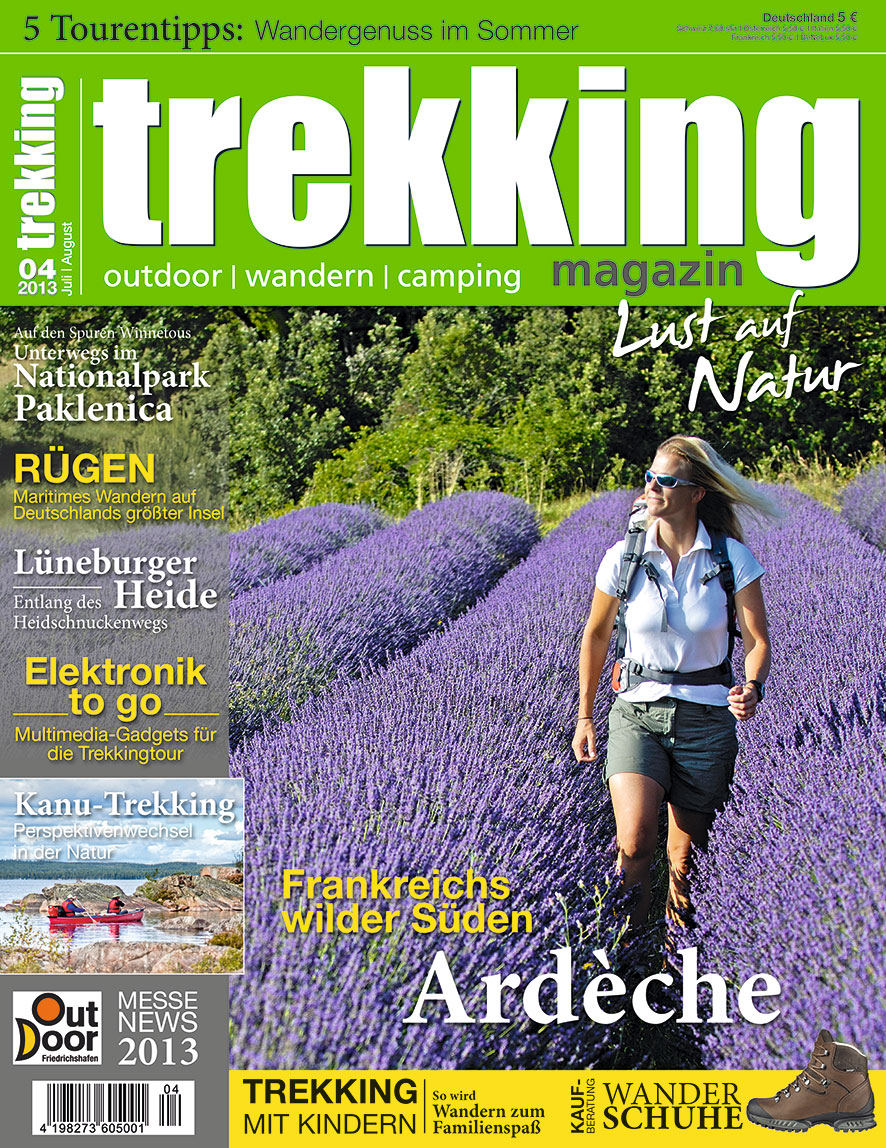
Yesterday we read the new issue 4 (July/August) 2013 of Trekking Magazin, with the Ardèche as its main theme. We liked the article on trekking tours (in plain English: walks) in the Ardèche region very much. It describes hikes in the northern, mountainous part around Aubenas as well as in the southern part of the département around the Ardèche Gorge. Some trails are also suitable for mountain bikers. However, we felt that the cover story could have been a little more detailed and run to more pages. But that is of course also down to our special interest in the wonderful Ardèche region.
Administratively, France is divided into 101 départements. The Ardèche département has the number 07 and lies in the south-eastern part of the mainland. It belongs to the Rhône-Alpes region. The River Ardèche, which flows through this region, gives the département its name. A wonderful landscape with unique flora and fauna is a welcome reason for many tourists to spend an unforgettable holiday in the Ardèche. Nature lovers with a taste for quiet hours away from mass tourism feel very much at home in this region. Continue reading “Wine routes and wine holidays around the Ardèche region, southern France”
Provençal and Occitan are two names, often used synonymously, for a regional language of southern France. Some linguists speak of the Occitan language as the umbrella term and of the Provençal dialect for the variant spoken in Provence. Provençal, or Occitan, is much more closely related to Catalan than to French. The Provençal variant of the language is increasingly becoming a compromise language in contacts between speakers of different Occitan dialects. Historically, Provençal was much more important than French until the fourteenth century, but was completely displaced by the French language by the sixteenth century at the latest. Provençal experienced its first renaissance as a literary language in the 1930s. Continue reading “The Provençal or Occitan language in southern France”
This website uses cookies. If you continue to use the site, we assume you agree.

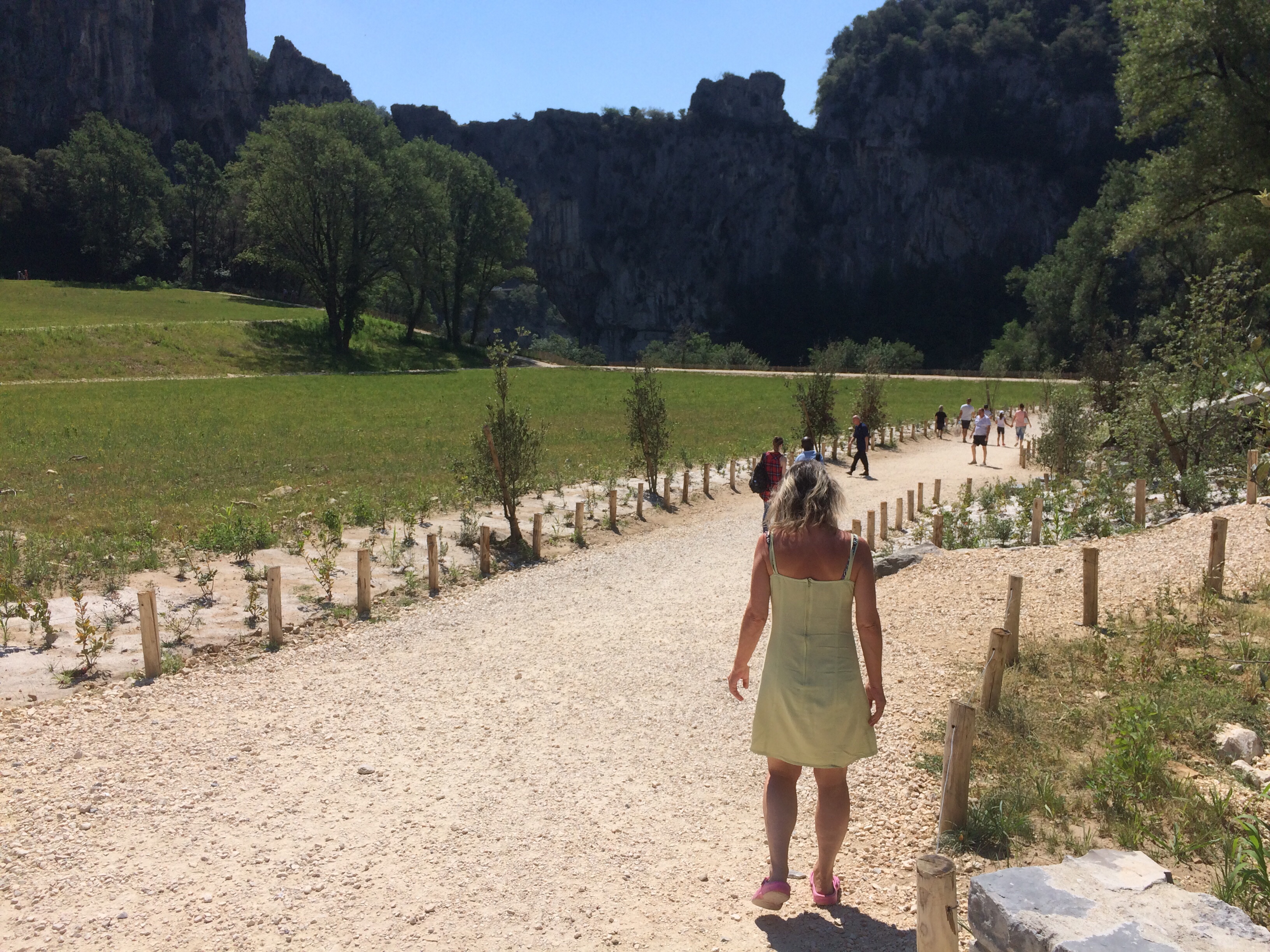
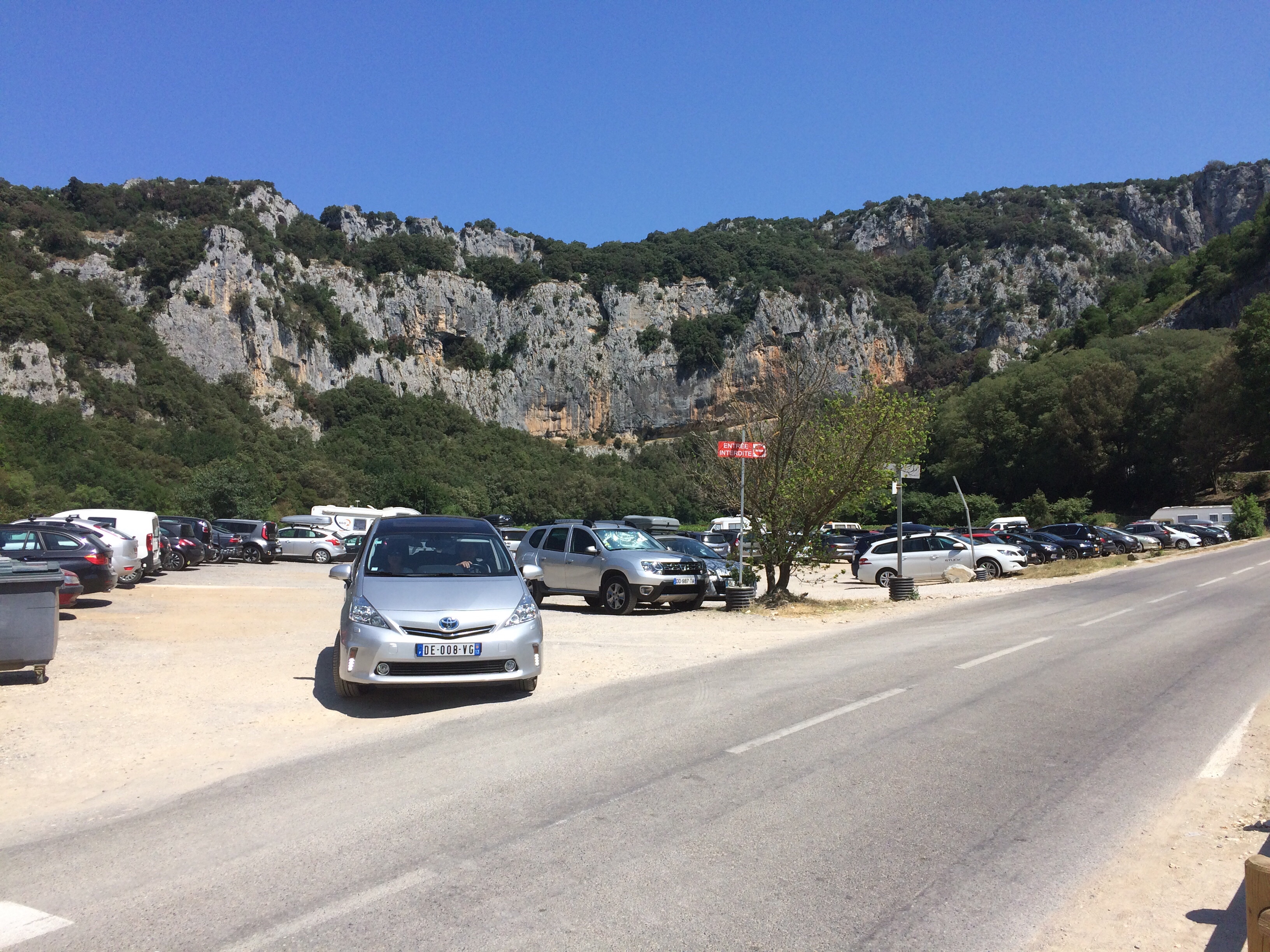 Park in the large car park by the road, then follow the wide path down to the river.